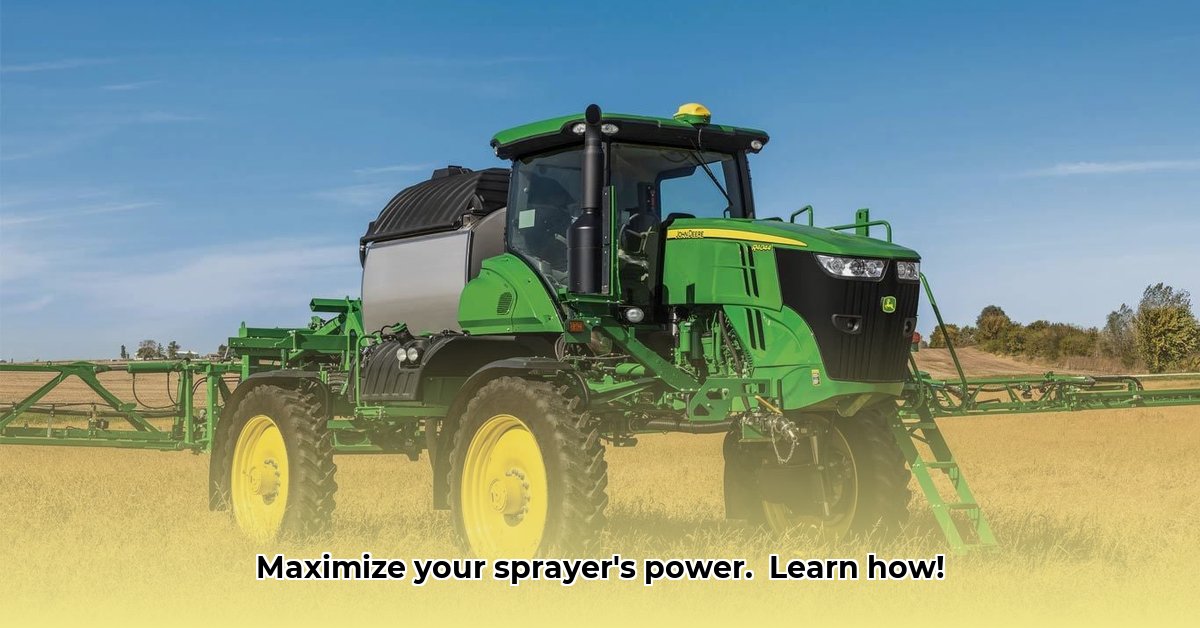
Tractor Sprayers: Optimizing Crop Spraying for Profit and Sustainability
Modern farming demands efficient and sustainable practices. Tractor sprayers, crucial for crop protection, must be optimized for both profitability and environmental responsibility. This guide explores the selection, maintenance, and future of tractor sprayers, empowering farmers to make informed decisions. Are you ready to revolutionize your spraying operations? Learn more about boomless sprayer technology at this helpful resource.
Choosing the Right Sprayer: A Tailored Approach
Selecting the optimal sprayer depends on factors like farm size, crop types, and budget. The three primary categories are:
Pull-Type Sprayers: These are simple, affordable options, best suited for smaller farms with straightforward needs. They're the reliable workhorses of the industry.
Self-Propelled Sprayers: Offering greater precision and maneuverability, these are ideal for larger fields and diverse terrains. They provide enhanced control over application uniformity.
Mounted/Three-Point Sprayers: These versatile units attach to your tractor's three-point hitch, providing a balance between convenience and capacity. They offer a practical middle ground between simplicity and advanced features.
The best choice hinges on your farm's unique requirements. Do you prioritize affordability and simplicity, or are you seeking greater precision and control? This decision directly impacts operational efficiency.
Precision Spraying: Efficiency and Environmental Stewardship
Precision spraying minimizes environmental impact while increasing efficacy. It's like using a scalpel instead of a hammer, targeting resources precisely where needed. Did you know that precision spraying can reduce chemical usage by up to 50%?
Key technologies driving precision include:
GPS Guidance: GPS ensures even coverage, preventing overlaps and missed spots. This technology acts as a virtual co-pilot, enhancing accuracy and reducing waste.
Auto-Boom Height Control: Automatic boom height adjustment maintains optimal spray height, regardless of terrain variability. This consistent application minimizes drift and ensures uniform coverage.
Variable Rate Technology (VRT): VRT adjusts the application rate based on crop health or soil conditions. This intelligent system optimizes resource allocation based on specific field needs.
These technologies synergistically work to create a more efficient and environmentally conscious spraying process.
Maximizing Sprayer Performance: A Practical Guide
To ensure optimal performance and longevity, follow these crucial steps:
Regular Maintenance: Thoroughly cleaning the sprayer after each use, checking for leaks, and inspecting nozzles for wear are paramount. Preventative maintenance minimizes costly repairs and downtime.
Calibration Precision: Accurate calibration ensures the correct chemical application rate per acre. Inaccurate calibration wastes chemicals and money, impacting both the budget and the environment.
Weather Awareness: Avoid spraying during windy or rainy conditions. Wind causes drift, while rain washes away chemicals before they take effect. Weather monitoring is key to maximizing application efficiency.
Nozzle Selection: Different nozzles create different spray patterns. Choose nozzles appropriate for your crops and chemicals to optimize coverage and minimize drift. Choosing the wrong nozzle can severely impact application success.
Data-Driven Optimization: Modern sprayers often collect data on spraying patterns. Analyzing this data improves technique and efficiency over time. This data-driven approach continuously refines your spraying strategy.
The Future of Tractor Sprayers: Technological Advancements
The future of crop spraying holds exciting possibilities:
Drone Technology: Drones provide exceptional precision, accessing difficult-to-reach areas. Their maneuverability enhances efficiency in complex terrains.
AI-Powered Systems: Artificial intelligence (AI) promises even more precise application, adapting to constantly changing conditions in real-time. AI integration provides adaptive spraying strategies.
These advancements, while promising, present challenges in training and maintenance.
Challenges and Opportunities: Navigating the Transition to Precision
While precision spraying offers numerous benefits, challenges remain:
High Initial Investment: The upfront cost of advanced technology can be significant for smaller farms. This necessitates careful consideration of long-term returns.
Regulatory Landscape: Environmental regulations increasingly demand sustainable practices, influencing the adoption of new technologies. Compliance and adaptation are vital.
Adoption Barriers: Successful implementation requires sufficient farmer training and ongoing support. Providing adequate training ensures smooth transition and successful adoption.
Dr. Anya Sharma, Agricultural Engineering Professor at Cornell University, states, "The transition to precision spraying requires a holistic approach, encompassing technological advancements, policy support, and farmer education. Only through integrated strategies can we fully realize the potential of these technologies."
Conclusion: Embracing a Sustainable Future
Investing in updated sprayer technology and efficient practices benefits both farmers and the environment. Reduced costs, increased yields, and minimized environmental impact contribute to a more sustainable agricultural future. Smart spraying is not merely a technological advancement but a crucial step towards ensuring food security and environmental responsibility.
| Feature | Improved Efficiency & Reduced Costs | Reduced Environmental Impact |
|---|---|---|
| Precision Spraying | ✅ | ✅ |
| Regular Maintenance | ✅ | ✅ |
| Proper Calibration | ✅ | ✅ |
| Appropriate Nozzle Choice | ✅ | ✅ |
| Data-Driven Approach | ✅ | ✅ |
The future of farming hinges on the responsible adoption of innovation. Smart spraying underpins this sustainable future.